

LPC Rebuild Board for 1.6 Mod Chip Install
LPC Rebuild Board for 1.6 Mod Chip Install
Couldn't load pickup availability
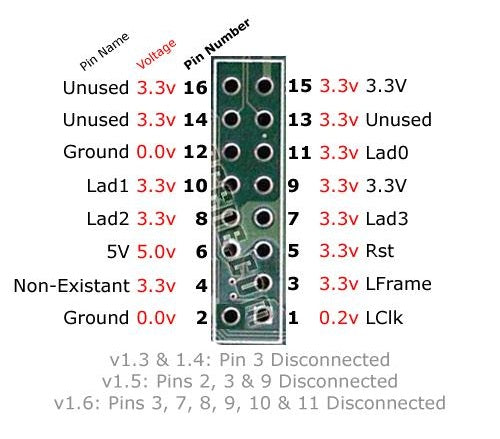
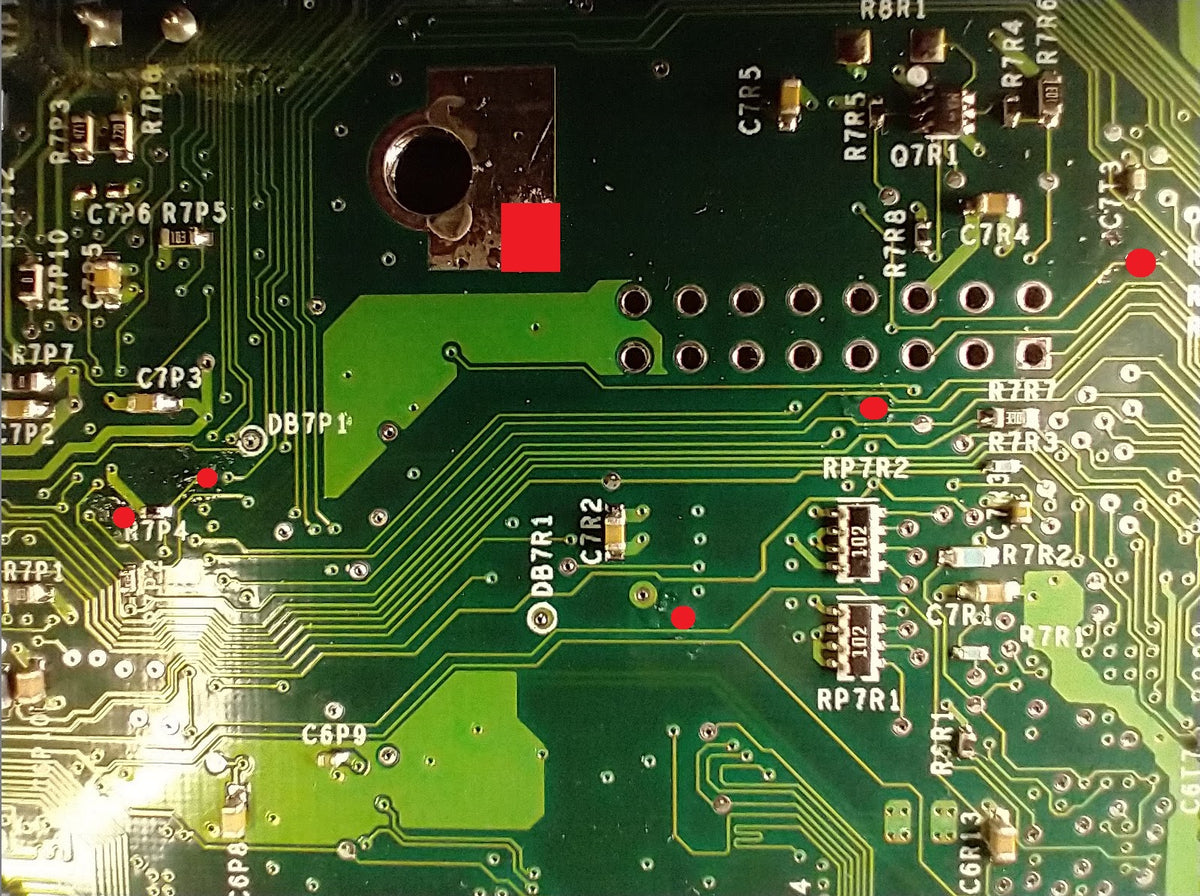
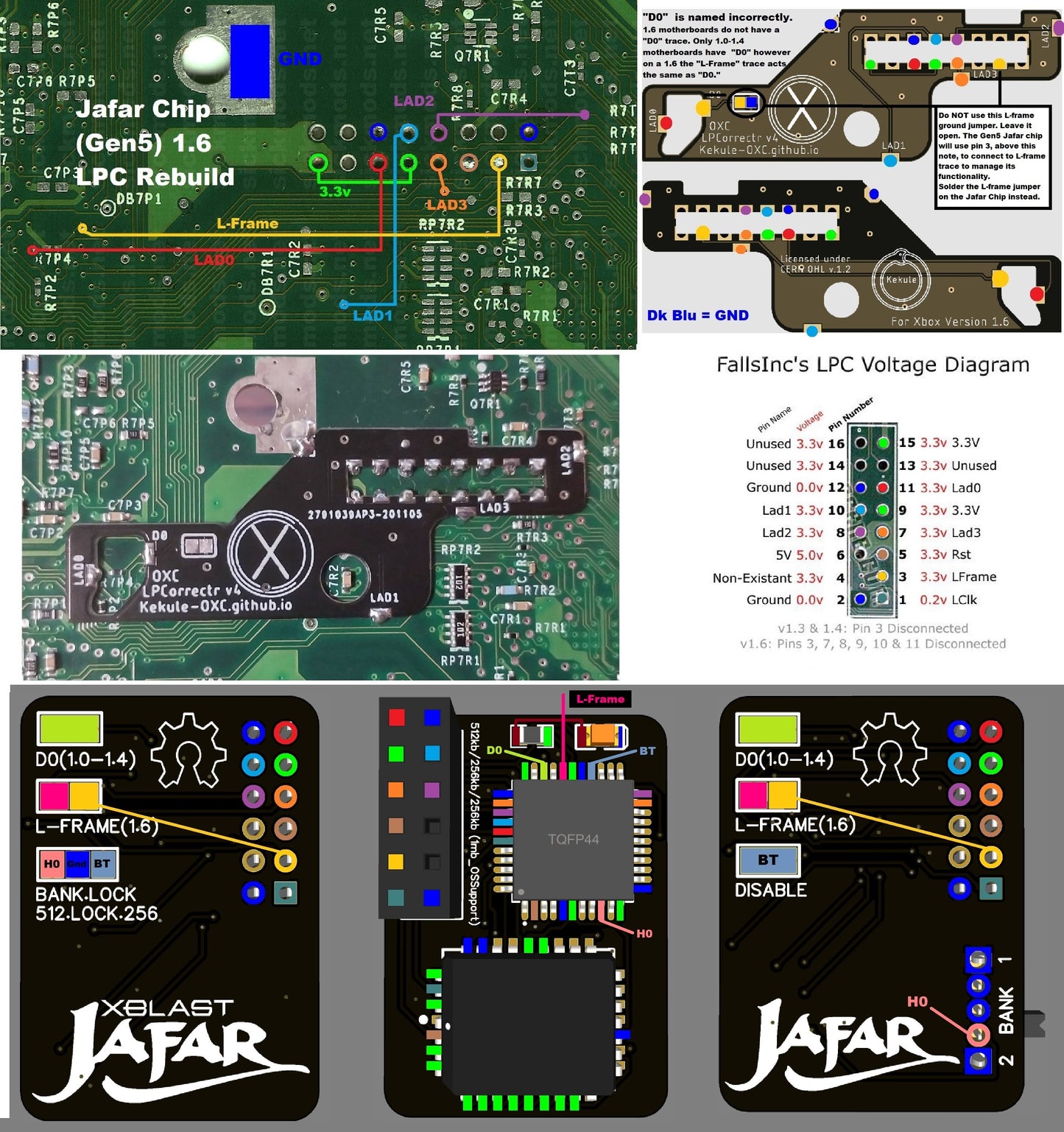
Xbox 1.6 and 1.6b motherboards have several LPC signal traces removed from the motherboard. These traces must be restored before a mod chip can be installed.
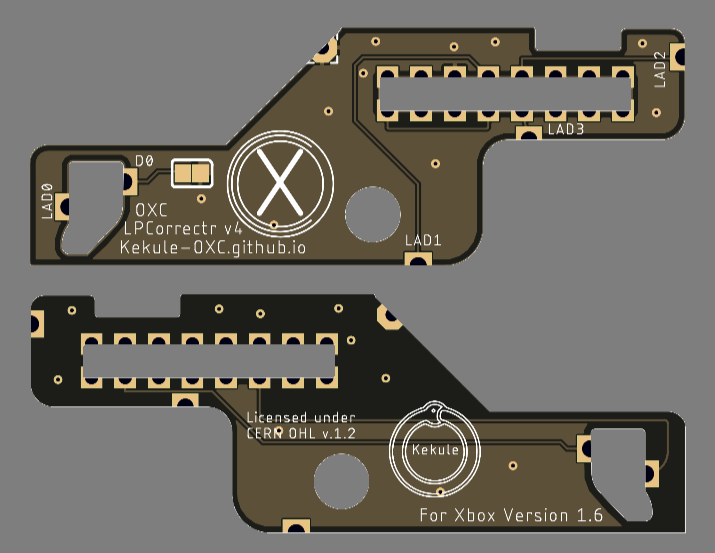
The LPC rebuild board restores these missing connections and provides clean solder points for mod chip installation. An LPC rebuild can also be performed manually using 30 AWG wire, but many installers prefer using a rebuild board for a faster and cleaner installation.
Versions
Flex Version
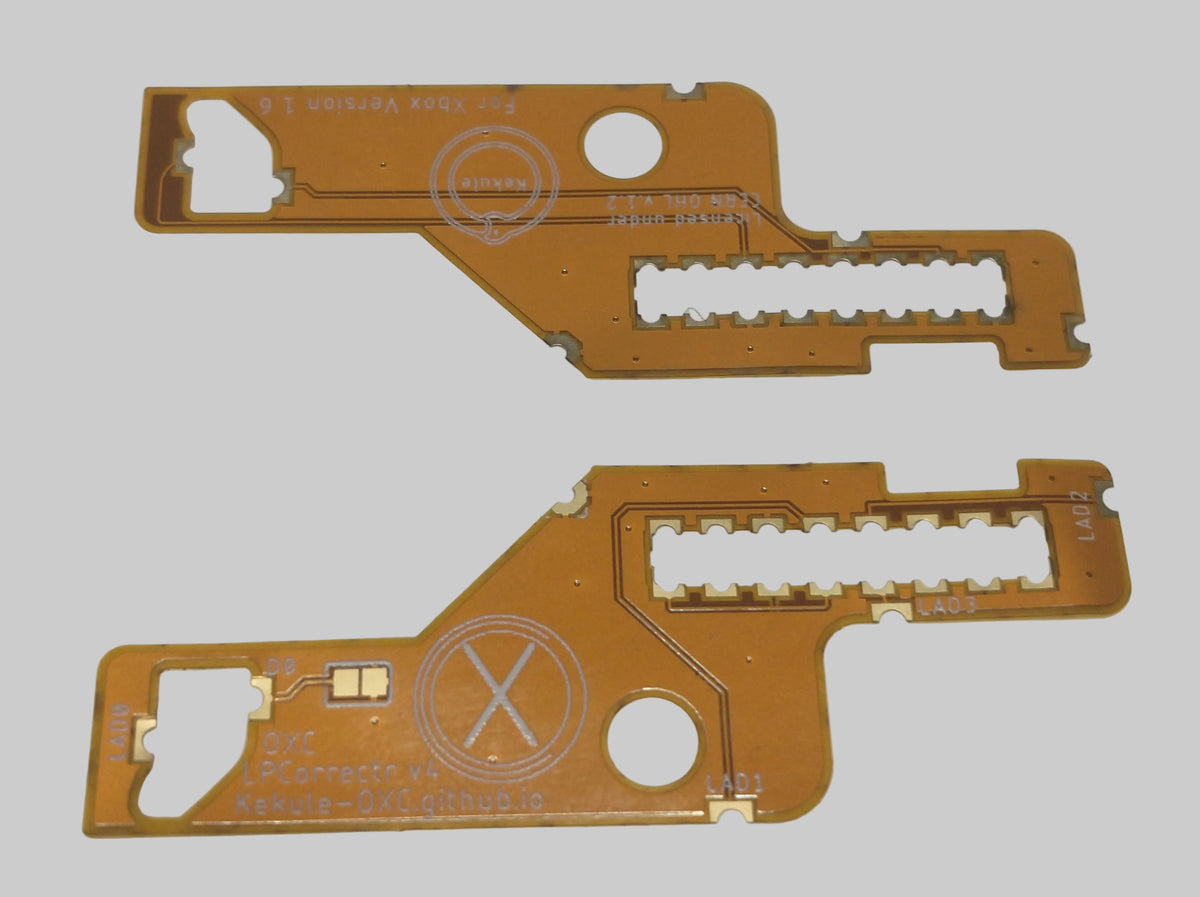
The flex version uses an ultra-thin flexible PCB designed to sit closely against the motherboard surface while restoring the missing LPC signal traces required for Xbox 1.6 and 1.6b mod chip installation.
Its thin flexible construction gives it a lower-profile fit than rigid FR4 versions, places less mechanical stress on the LPC pads, and helps it conform more naturally to the motherboard surface.
The flex version is also easier to remove than rigid rebuild boards if rework, correction, or removal is needed.
FR4 (Castellated) Version
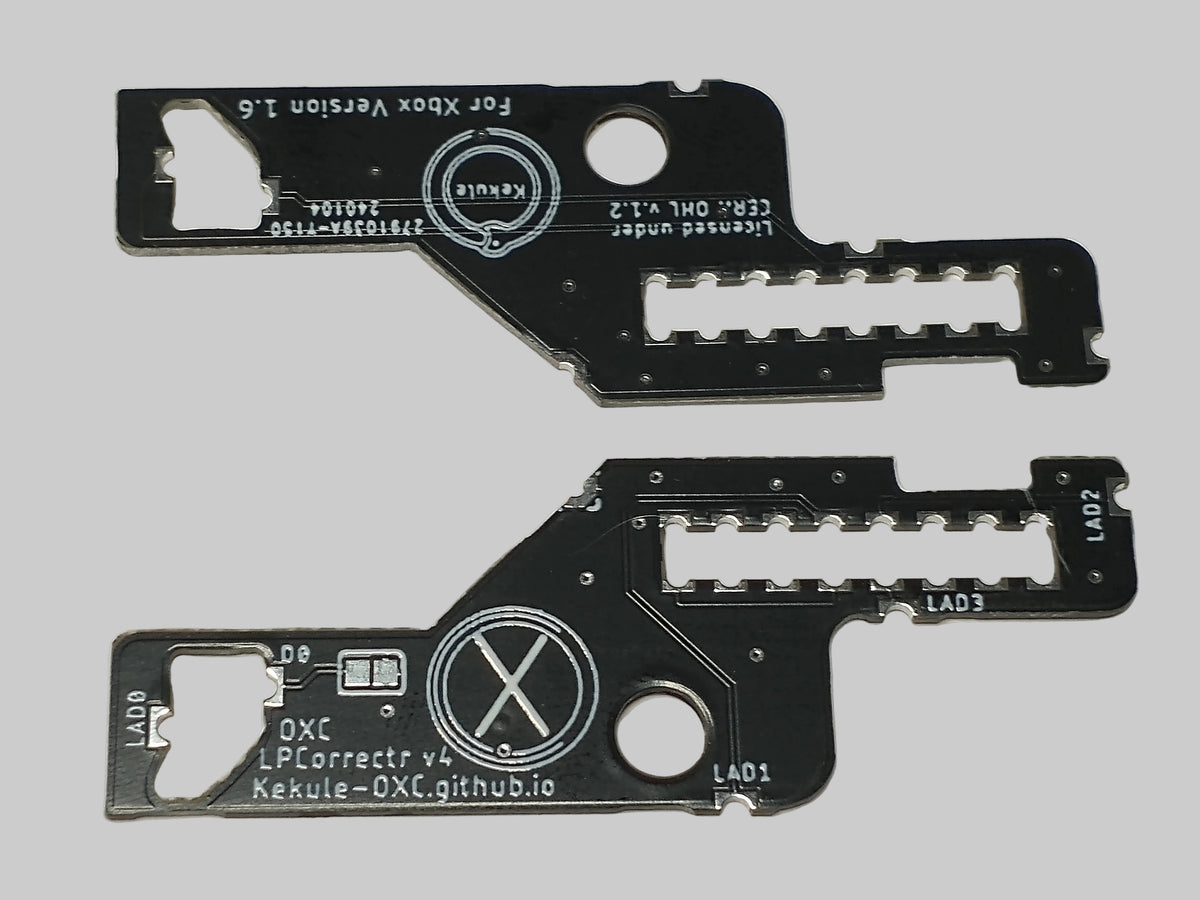
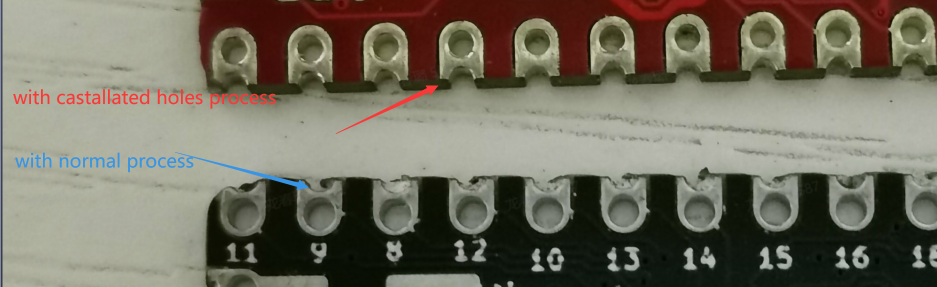
The castellated FR4 version uses rigid fiberglass construction with plated half-holes along the edges. These castellated pads provide clean solder contact points and a solid mechanical connection to the LPC pads.
The rigid FR4 (fiberglass) construction provides a traditional rebuild board structure while maintaining precise alignment of the LPC contact points.
FR4 (Non-Castellated) Version
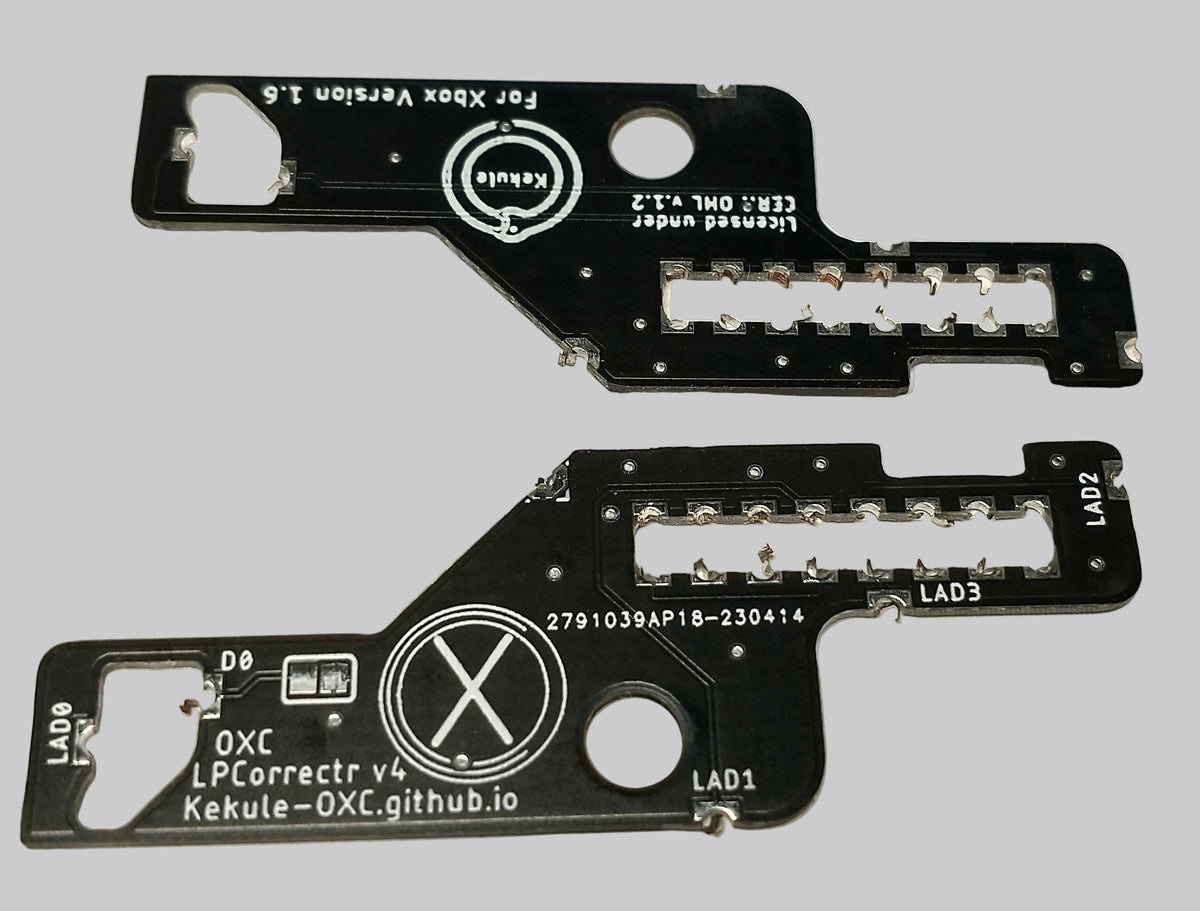
This version requires manual trimming of excess copper foil before installation.
Improper trimming can tear copper traces and damage vital connections on the board. Loose or untrimmed foil may also make contact with adjacent traces or pads that it should not, which can cause electrical faults.
This is an expert-level preparation option intended for installers comfortable working with fine PCB features. Careful trimming is required before installation.
This production style is being phased out and will not be restocked once current inventory is depleted. ---Priced for CLEARANCE
Installation Notes
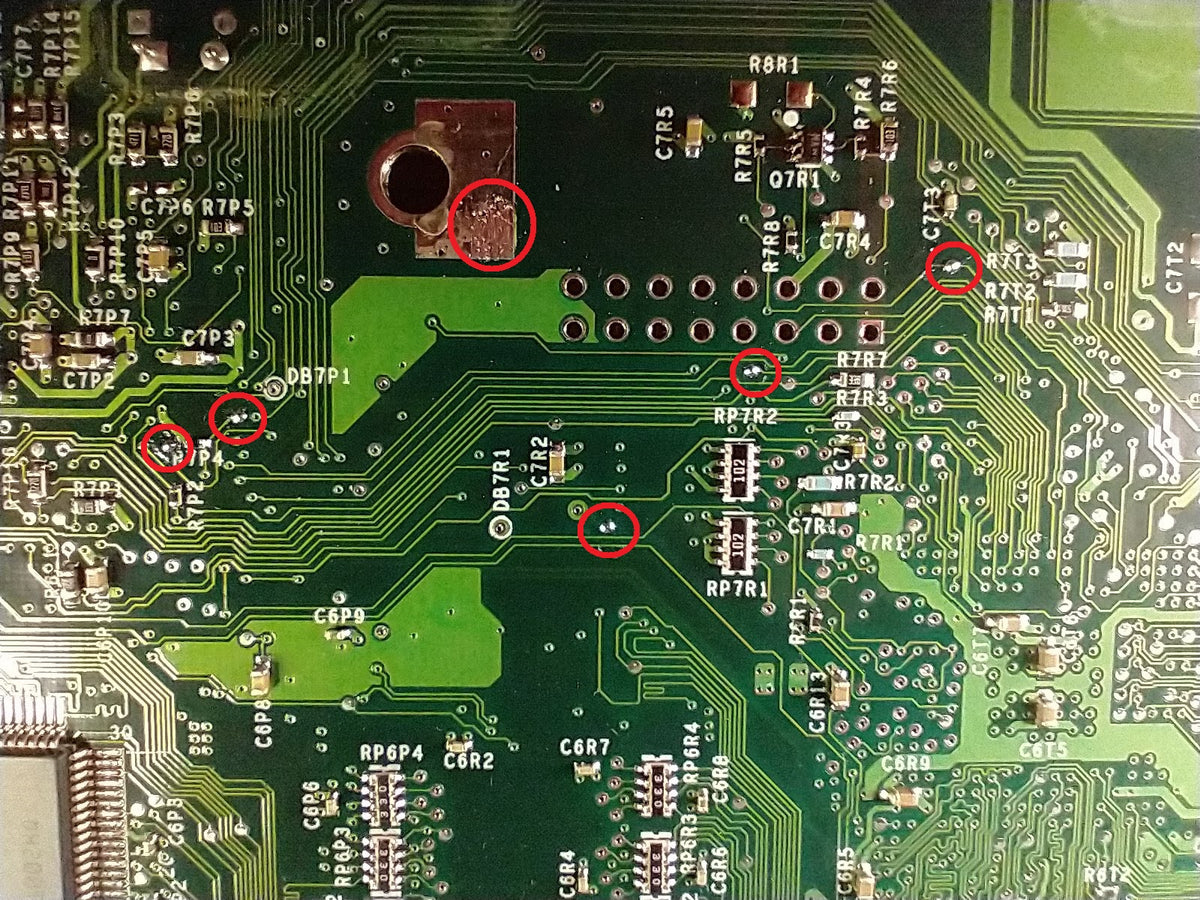
For best installation results, the LPC pads on the motherboard should be pre-tinned before applying the rebuild board.
Pre-tinning allows solder to flow quickly and evenly between the motherboard vias/pads and the rebuild board pads. This helps the solder bond cleanly, improves placement accuracy during installation, and reduces the amount of time heat must be applied with the soldering iron.
This step is especially important with the FR4 versions. Because FR4 boards are thicker and more rigid, they can hold the contact point at a slight angle if the motherboard pads or vias are not already pre-tinned. When that happens, the iron may not make direct, efficient contact where it needs to, and solder and flux can flow down into that small gap instead of bonding cleanly between the motherboard and the rebuild board.
On vias and other tight contact points, pre-tinning with solder paste generally works better than relying on rosin core wire solder. Solder paste delivers flux and micro solder directly to the point being heated and is more tolerant of the extra heat sometimes needed to get a good bond on small vias. Rosin core wire solder is less forgiving in this situation because the rosin flux can polymerize and harden if it is heated too long in that small gap.
When that happens, it creates a tenting effect. In simple terms, the hardened flux can form a barrier between the via and the rebuild board pad. Once that tenting effect happens, it becomes much harder to get a direct electrical connection because the solder is no longer flowing cleanly where it needs to. Reflowing it is also more difficult because once the flux activator has been burned off, the polymerized residue does not work as effectively as fresh flux. The rebuild board may look soldered, but the connection can still be weak or incomplete. It is essentially glued in place by polymerized rosin flux rather than being electrically connected. For more information on flux behavior and chemistry, see “Flux & Solvent Control Standard” under the “TK’s Shop Docs & Procedures” section in the Resources tab at the top of this site.
The flex version greatly reduces this problem because the board is much thinner and sits closer to the motherboard surface, so it does not create the same odd contact angle that thicker FR4 boards can. That makes the flex version more forgiving in terms of pad contact and solder flow. However, the flex version is also more sensitive to excessive heat dwell. Proper pre-tinning is still important because it allows the board to solder into place faster and more precisely, reducing the chance of heat damage from holding the iron on the board too long.
If a via needs to be used as a contact point, it should be clean and properly pre-tinned before the rebuild board is applied. A useful prep method is to lightly scratch away any solder mask on the via, clean the area, and then pre-tin it before placing the board. Once the motherboard pads and vias are properly pre-tinned, the rebuild board and motherboard will typically flow together quickly, smoothly, and accurately during installation.
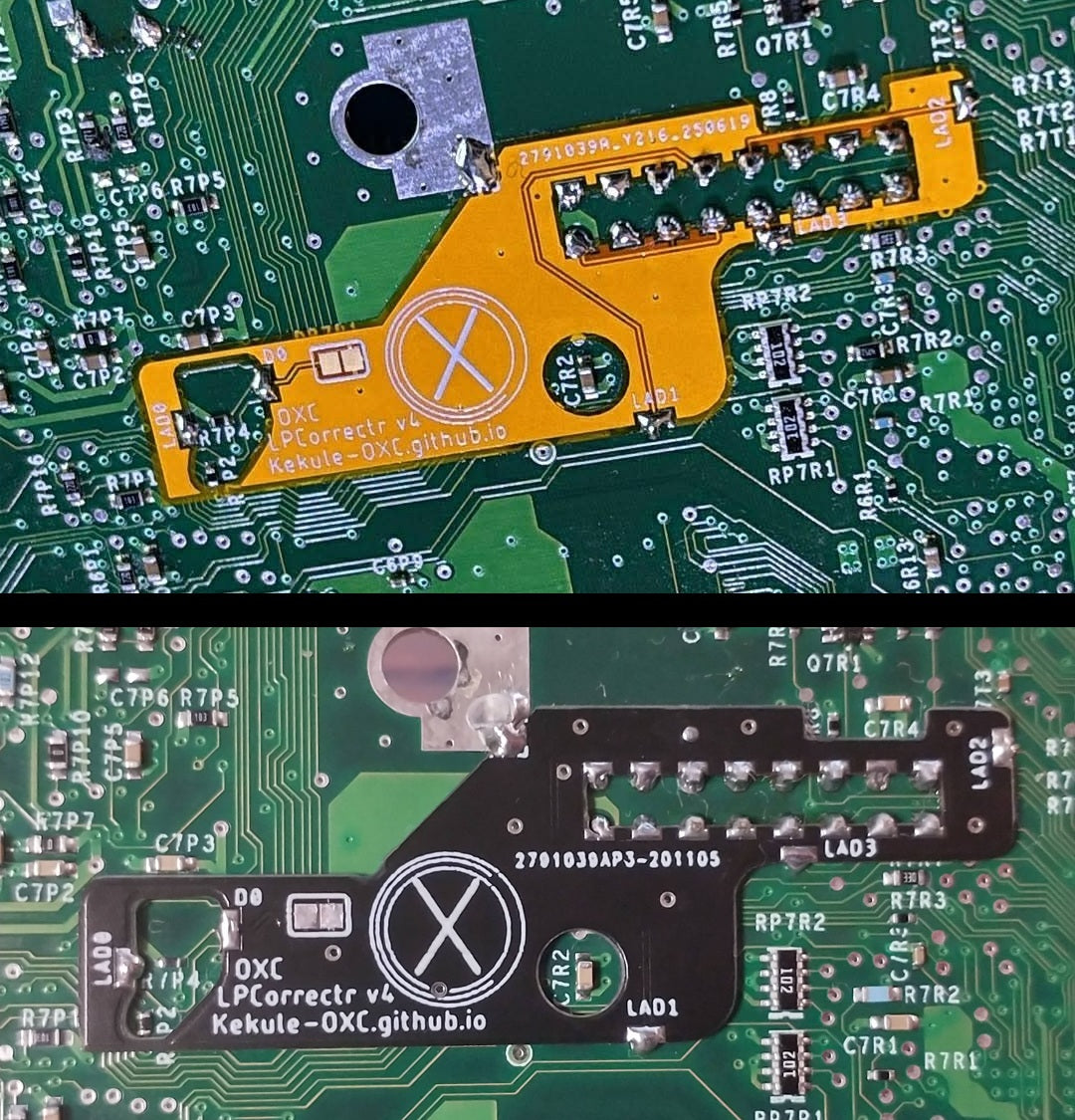
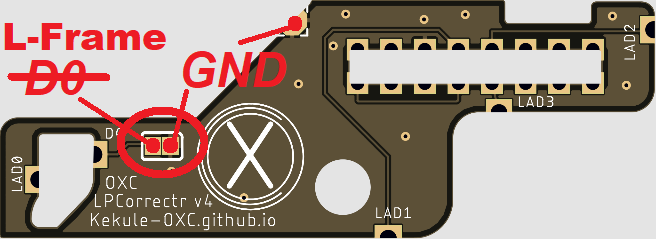
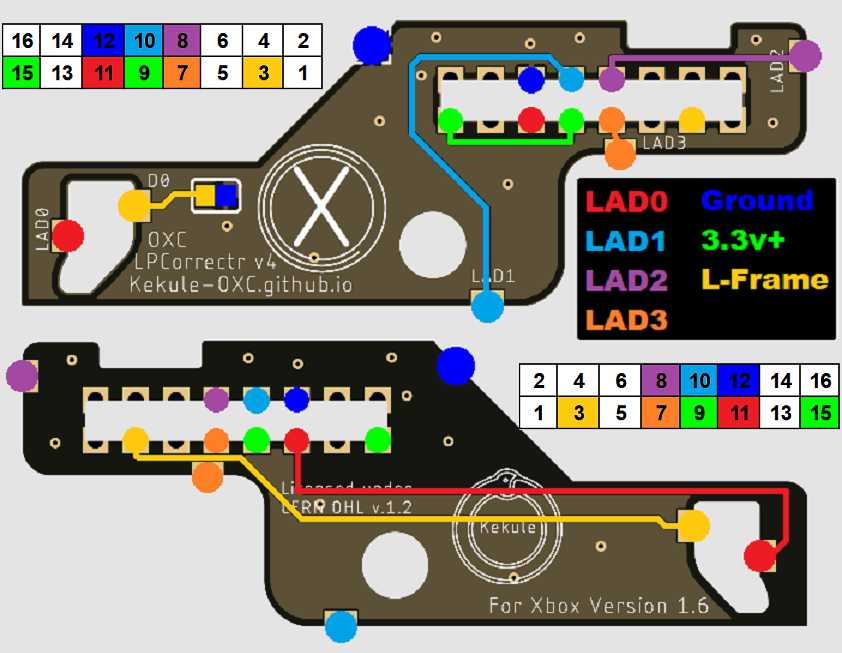
Follow the installation reference shown in the product images when positioning the rebuild board.
Licensing & Source
-Hardware is shared under the CERN OHL version 1.2
Source: https://github.com/Kekule-OXC/OXC_LPCorrectr
OXC_LPCorrectr designed by Chimeric Systems